Nano Banana 2 Review: Pro-Level Quality, Flash Speed, and 50% Lower Cost
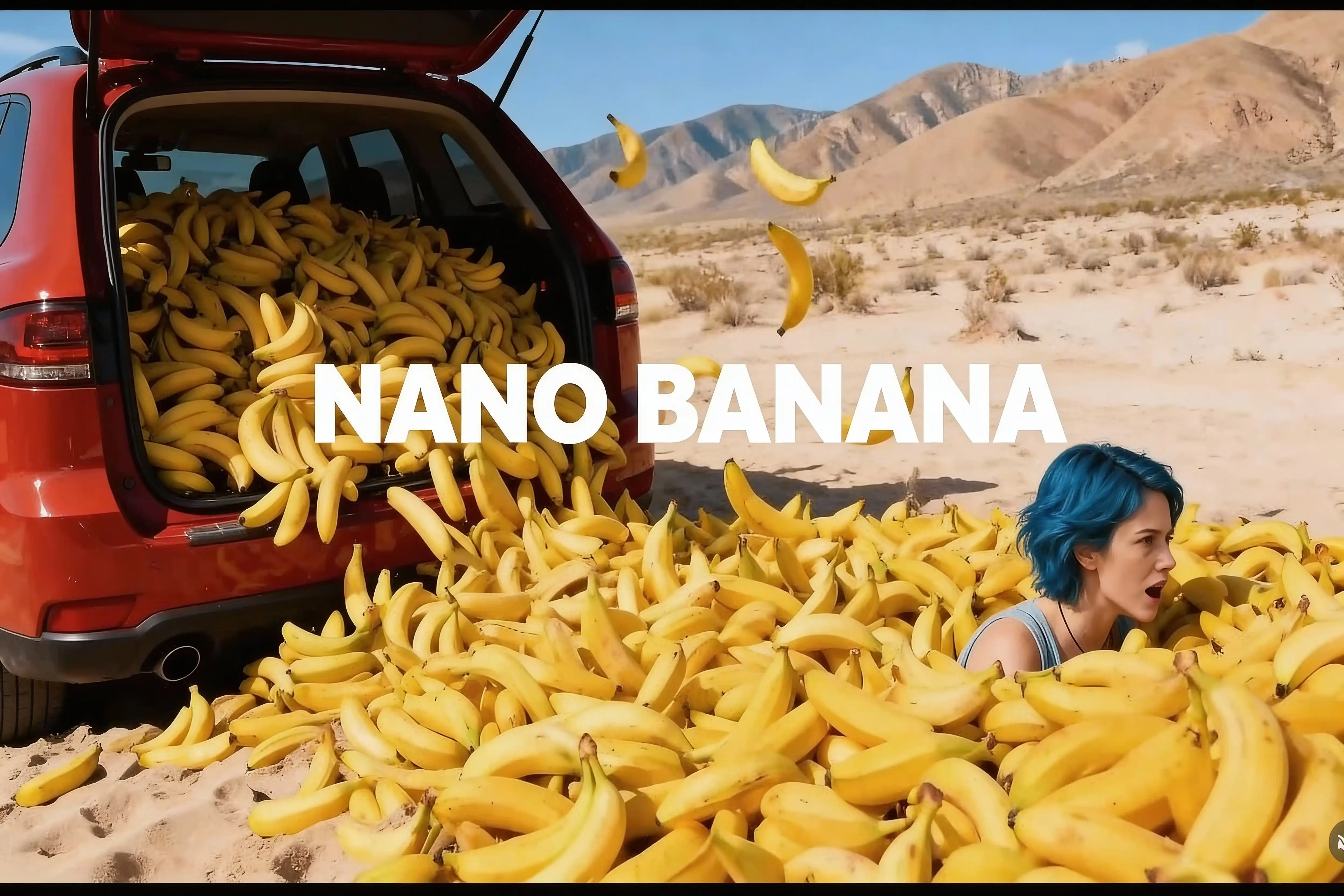
In the final days of February 2026, Google released Nano Banana 2. Officially called Gemini 3.1 Flash Image, this model promises Pro-level quality at Flash-level speed, with pricing cut by up to 50%. CEO Sundar Pichai called it "our best image model yet." But does it actually live up to the hype? Here's what the specs, benchmarks, and real-world results actually show. Whether you're a content creator, marketer, or developer, here's the full Nano Banana 2 review you need before jumping in.
What Is Nano Banana 2?

Nano Banana 2 (officially Gemini 3.1 Flash Image) is Google's latest image generation model, launched on February 26, 2026. It sits at an interesting crossroads in Google's lineup - becoming the default model and taking over most use cases previously handled by both the original Nano Banana and the Pro variant.
Here's the timeline: the original Nano Banana debuted in August 2025 and quickly went viral, with over a billion images generated worldwide. Nano Banana Pro followed in November 2025, adding studio-quality creative control. Now Nano Banana 2 combines the best of both - Pro's advanced intelligence with Flash's speed - and rolls it out for free through the Gemini app.
The model is available across Google's product ecosystem: the Gemini app, Google Search (AI Mode and Lens, now expanded to 141 new countries), Flow, AI Studio, Vertex AI, the Gemini API, and Google Ads.
Key Features of Nano Banana 2
Lightning-Fast Generation Speed
Speed is the most immediately noticeable upgrade. Complex prompts render in roughly 10–15 seconds, with full 4K images generating in under a minute. That's fast enough to change how you work with the tool - instead of batching requests and hoping for the best, you can iterate freely, tweaking prompts and seeing results quickly.
The pricing reflects this efficiency too. API costs start at $0.045/image (512px) and $0.067/image (1K), roughly 50% cheaper than Pro at comparable sizes. Text tokens are 70–80% cheaper.

One line sums it up: Pro-level quality, Flash-level price.
Precision Text Rendering and Translation
Text in AI-generated images has historically been a mess - garbled letters, wobbly characters, unreadable labels. Nano Banana 2 addresses this with what Google calls "precision text rendering." You can now generate readable text on billboards, newspapers, signs, and marketing mockups. It goes further than basic stability - the model can mimic handwriting to compose a poem, matching stroke style and letter spacing convincingly.

The model also handles multilingual localization - generate a sign in English, then localize it to Hindi, and it adjusts both text and visual elements to match the target market.
Real-World Knowledge Integration
Nano Banana 2 pulls from Gemini's real-world knowledge base and can use real-time web search to inform image generation. Ask it to render the Clos Lucé Castle in Synthetic Cubism style - it searches for visual references first, then renders accurately. Ask for a water cycle infographic, and you get a publication-ready diagram with proper labels.


Google even built a "Window Seat" demo where the model generates realistic airplane window views of any location using real-time weather and geographic data. The caveat: real-time data isn't always accurate - weather and date information can be occasionally outdated. Always verify data-driven outputs before publishing.

Up to 4K Resolution with Flexible Aspect Ratios
Nano Banana 2 outputs at 2K natively and up to 4K, with full control over aspect ratios - from 512px squares to 4K widescreen, including extreme ratios like 8:1 and 1:8 for banners and panoramic content. The new 512px mode is designed for low-latency, high-volume workflows where rapid iteration matters.

For developers, a configurable "thinking level" controls how much reasoning the model applies before generating. Default is fastest; switching to high or dynamic mode improves results for complex prompts.
Subject Consistency Across Images
One of Nano Banana 2's standout features is subject consistency. The model maintains character resemblance for up to five characters and preserves the fidelity of up to 14 objects in a single workflow.

Google demonstrated this with 14 different characters and items in a farm scene - every single one maintained its identity without "face-swapping" or "character drift." In another demo, three fluffy characters build a treehouse across six sequential images, with consistent appearance but varying expressions and angles throughout.

For content creators building visual stories, storyboards, or sequential ad campaigns, this changes the game. You no longer need to regenerate and pray that your main character keeps the same face.
Real-World Testing: What I Found

The benchmarks back up the hype - to a point. On Artificial Analysis's text-to-image benchmark, Nano Banana 2 ranked #1 globally. On Image Arena, it scored 1280 Elo, topping the leaderboard for text-to-image generation.

Google's own evaluation showed that Nano Banana 2 (with Thinking + text search + image search enabled) outperformed GPT-Image 1.5, Grok Imagine Image Pro, and even Nano Banana Pro across overall preference, visual quality, and infographic accuracy.
But benchmarks only tell part of the story. Here's what actual usage looks like.
Here's a complex prompt test: a "Where's Waldo" scene set in ancient Venice, but with an otter in a blue-striped pilot outfit instead of Waldo. The model handled it with reasonable consistency - the otter was correctly placed and identifiable, though some background characters had minor artifacts like a boy with a tail.

Infographics, advertising mockups, action shots, and cartoon generation all show clear improvements - and at noticeably faster speeds.

Feed the model a rough sketch with the prompt "Turn this sketch into a landing page for an AI video platform," and it returns a polished, production-ready UI mockup. That's a glimpse of where design workflows are headed.

Impressive results - but not without caveats. More on what still trips up the model below.
Nano Banana 2 vs Nano Banana Pro
With Nano Banana 2's release, Google simplified its lineup. The new model replaces Nano Banana Pro as the default across Fast, Thinking, and Pro settings in the Gemini app. Pro subscribers can still access Nano Banana Pro through the three-dot menu for specialized tasks.
Here's how they compare across key dimensions:
| Feature | Nano Banana 2 | Nano Banana Pro |
|---|---|---|
| Speed | Flash-level (includes fast 512px mode) | Slower (higher fidelity processing) |
| Image Quality | Pro-level fidelity | Maximum fidelity |
| Character Consistency | Up to 5 characters, 14 objects | Multi-character support |
| World Knowledge | Real-time web search grounding | Advanced knowledge base |
| Pricing (API) | $0.045–$0.151/image (512px–4K) | ~$0.05–$0.24/image (size-dependent) |
| Access | Free in Gemini app (default) | Pro/Ultra subscribers only |
| Best For | Rapid iteration, mockups, social content | Maximum factual accuracy, final deliverables |
The verdict: For 90% of use cases - social media content, mockups, storyboarding, quick iterations - Nano Banana 2 is the better choice. It's faster, cheaper, and nearly as capable. Reserve Nano Banana Pro for high-stakes projects where absolute precision matters more than speed.
Nano Banana 2 vs Seedream 5.0
Google isn't the only player pushing AI image generation forward. ByteDance released Seedream 5.0 in the same month - February 2026 - taking a different approach to the same problem. Here's how they stack up:
| Feature | Nano Banana 2 | Seedream 5.0 |
|---|---|---|
| Speed | Fast (~10–15s) | Medium (~12–25s) |
| Image Quality | Photorealistic, high fidelity | Strong artistic quality, aesthetic refinement |
| Text Rendering | Pro-level precision | Supported (typography, charts, text overlays) |
| Real-Time Knowledge | Web search grounding | Web search grounding (also supported) |
| Ecosystem | Google (Gemini, Search, Ads, Flow) | ByteDance (Dreamina, etc.) |
| Pricing / Access | Free in Gemini app; API $0.045–$0.151/image | Paid from $7.9/month; Lite API ~$0.035/image |
| Best For | Speed + ecosystem integration + free access | Artistic generation + style control |
The verdict: These two models are closer competitors than they first appear - both now offer web search grounding and text rendering. Nano Banana 2's edge is ecosystem integration (Gemini, Search, Ads, Flow) and free access through the Gemini app. Seedream 5.0 leans into artistic refinement and offers competitive API pricing through its Lite tier. If you're already in Google's ecosystem, Nano Banana 2 is the natural pick. If artistic style control matters more, Seedream 5.0 is worth exploring. For creators who want to experiment with multiple AI image generators, trying both gives you the broadest creative range.
Hands-On Verdict: Strengths and Limitations
Where Nano Banana 2 Shines
- Text rendering lives up to most promises. Short text on signs, billboards, and labels comes through clearly. Marketing mockups and greeting cards are now viable use cases.
- Small detail reproduction is impressive. When editing existing photos, the model faithfully reproduces clothing patterns, jewelry, and background elements not explicitly mentioned in the prompt.
- Photorealistic scenes show real improvement. Landscapes, interiors, and product shots benefit from enhanced lighting and texture. The eyelash-level detail in portrait shots - including visible red blood vessels in eyes and reflections of outdoor scenes - is striking.
- Instruction following is tighter. Complex, multi-part prompts with specific camera angles (35mm, 50mm, 85mm at various apertures) execute with stable results.
- Infographics and diagrams work better than expected. Water cycle diagrams, cloud comparison triptychs, and architecture diagrams all produce readable, structured outputs.

Where It Still Struggles
- Real-time data accuracy is inconsistent. Weather reports and date-specific information can be outdated or wrong. Always verify data-driven outputs.
- Face manipulation produces uncanny results. Swapping or editing faces on real photos often looks unnatural rather than seamlessly integrated.
- Clock rendering remains a known weakness across AI image models - Nano Banana 2 is no exception.
- Complex poses like handstands and inverted positions still produce anatomical errors.
- Long-form text degrades. Short headlines work great, but full newspaper article text shows waviness and occasional gibberish when examined closely.

When to Use Nano Banana 2
Quick social media visuals and blog graphics.
The speed and free access through Gemini make it practical for daily content production - no subscriptions or complex setups required.
Marketing mockups and campaign visuals.
Text rendering improvements make it viable for materials that include copy. The Google Ads integration means it fits directly into the advertising workflow.
Infographics, diagrams, and data visualization.
Real-world knowledge grounding and structured output capabilities handle educational and informational content well.
Rapid prototyping and UI mockups.
Designers can turn rough sketches into polished concepts in seconds, speeding up the iteration cycle.
API-powered image generation at scale.
Competitive pricing ($0.045–$0.151/image) and broad platform availability (Gemini API, Vertex AI, AI Studio) make it viable for production applications.
When to look elsewhere: If you need pixel-perfect accuracy for professional print work, traditional design tools or Nano Banana Pro remain the safer choice. For maximum artistic style control, explore tools like Seedream 5.0 or creative platforms like SeaArt AI that offer multiple model options.
Conclusion
Google is clearly betting big on making image generation fast, free, and deeply integrated across its ecosystem. Whether Nano Banana 2 fully replaces Pro for professional workflows remains to be seen - but for everyday content creation, it's already a strong option at a hard-to-beat price point. Try it free through the Gemini app, or explore SeaArt AI platforms if you want to compare across multiple models.