SeaHot Unleash Your Creativity
Transform your ideas into stunning AI-generated art and images today!
Try It Free Now
SeaHot AI - Free AI Art Generator

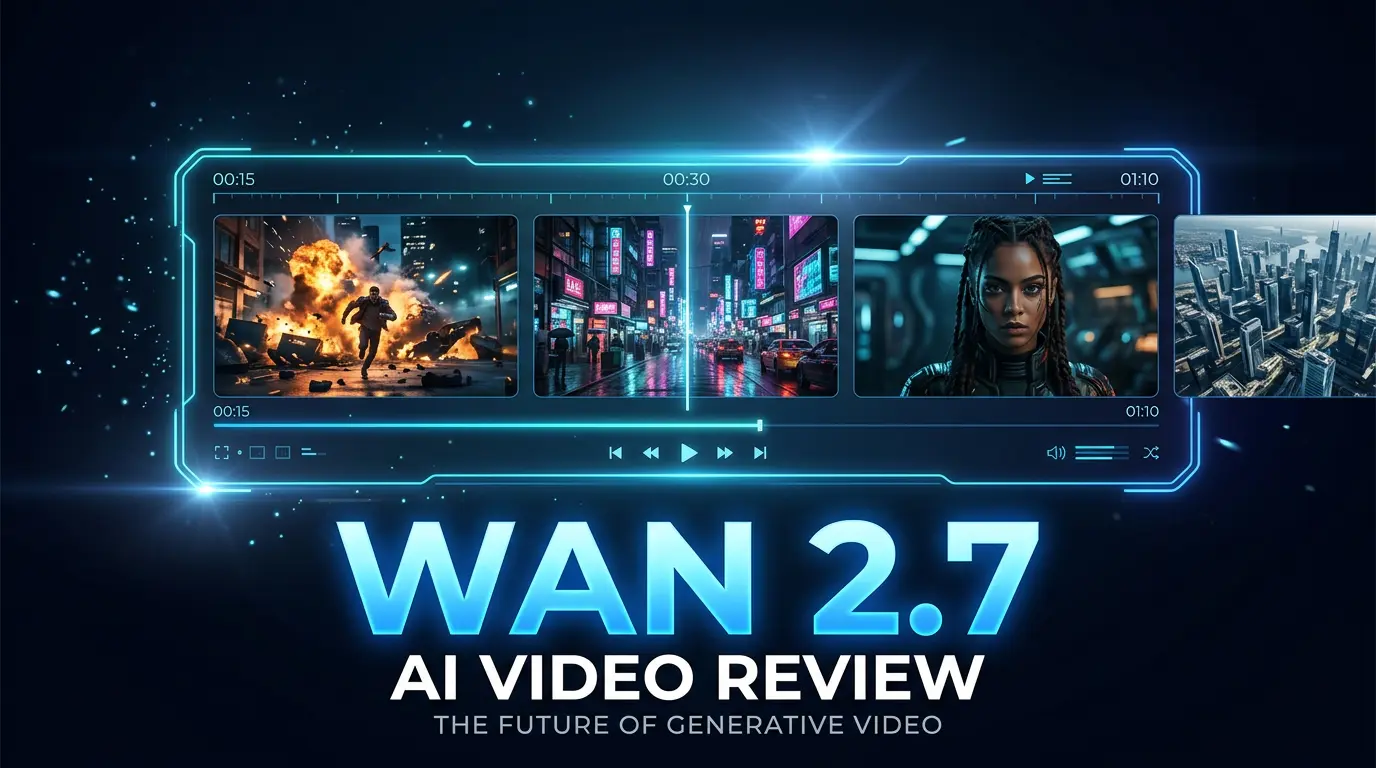
Wan 2.7 Image Review: Alibaba's Unified AI Model with Real Faces, Text, and Control

Chris
3 min read
Wan 2.7 image review covering both Pro and Standard versions. See face control, text rendering, image set generation, editing, and how it compares.

Every portrait looks like the same person. Text in images comes out garbled. Keeping a character consistent across multiple frames takes hours of manual work. Wan 2.7 image is Alibaba's answer to all three.

Released on April 1, 2026, this unified model handles generation, editing, face control, and multi-image consistency in a single architecture. Two versions are available: a Pro tier with 4K output and a faster Standard tier.

This Wan 2.7 image review covers both, with a clear look at what works and what doesn't. If you're looking for a capable AI image generator, here's how Wan 2.7 stacks up.

Wan 2.7 Image Creates AI Portraits

What is Wan 2.7 Image?

Wan 2.7 image is a unified image generation and editing model from Alibaba's Tongyi Lab. "Unified" is the key word - instead of separate models for generating images and editing them, Wan 2.7 handles both in the same architecture. It understands context, not just pixels.

The model comes in two versions:

  • wan2.7-image-pro: Better output quality, supports 4K resolution for text-to-image, stronger semantic understanding. Think of this as the precision tool.
  • wan2.7-image: Faster generation, maxes out at 2K resolution. The speed-first option.

Access is available through the Wan website - currently free to try - the Qwen App, and Alibaba's Model Studio for developers who want API access.

API pricing: $0.075/image for Pro, $0.03/image for Standard, with a free quota for new users.

Wan 2.7 Image Pro vs Standard

Before going deeper into features, here's the quick comparison between the two versions:

Featurewan2.7-image-prowan2.7-image
Max Resolution (Text-to-Image)4K2K
Max Resolution (Other Tasks)2K2K
Thinking ModeYesYes
Image Set GenerationUp to 12 imagesUp to 12 images
Reference Image InputUp to 9 imagesUp to 9 images
Generation SpeedSlowerFaster
Best ForPrint-ready work, complex promptsQuick iterations, drafts

The Pro version adds 4K output for text-to-image generation and delivers more stable compositions. If you're producing assets that need to hold up at print resolution or large-format display, Pro is the clear choice. Standard makes more sense for rapid prototyping - you trade resolution ceiling for speed.

Both versions support the same feature set otherwise: text-to-image, image editing, interactive editing, image set generation, and color palette control.

Wan 2.7 Image Key Features

Real Faces - Beyond the Standard AI Portrait

Create Real AI Faces with Wan 2.7 Pro

Most AI image generator has the same problem: portraits look identical. Same smooth skin, same symmetrical features, same vaguely attractive face repeated across every generation. Wan 2.7 Image tackles this head-on with granular face control - not filters or slight variations, but actual structural customization.

You can shape bone structure, define specific eye shapes (deep-set, phoenix, hooded), adjust overall face contours (round, square, rectangular), and layer on makeup, hairstyles, and accessories. This works across different ethnicities, ages, and body types. The result is portraits that look like distinct individuals rather than the same AI template with a different hairstyle.

For character design, virtual avatars, and any project where faces need to feel real and unique, this is a meaningful upgrade over what most generators offer.

Text Rendering - Up to 3,000 Tokens

AI Text Rendering - Wan 2.7 Image Model

The other feature that stands out immediately. Wan 2.7 image supports text input up to 3,000 tokens and renders text across 12 languages - including English and Chinese. That's enough to fill an A4 page with readable text.

What does that mean in practice? Academic papers with mathematical formulas, financial reports with data tables, vertical scrolling layouts, infographics with mixed text and images - the model handles all of these without the garbled text artifacts that plague most image generators. If you've ever tried rendering a book title or product label in other tools, you know how painful text usually is. Wan 2.7 actually gets it right.

Image Set Generation - Up to 12 Consistent Images

AI photo series of the same orange cat across four seasons

Single-image generation is table stakes. What's harder - and more useful - is generating multiple images where the subject stays consistent. Wan 2.7 supports generating up to 12 images in a single batch with character and style consistency maintained across all of them.

Feed it a prompt like "cinematic photo series of the same orange cat across four seasons" and the model produces four frames where the cat's markings, proportions, and overall feel stay coherent. You can also input up to 9 reference images to anchor the style and subject even further.

Use cases: storyboards, product catalogs, architectural multi-angle views, children’s book illustrations, e-commerce campaigns. If you’ve worked with how to make AI art workflows before, you know how time-consuming it is to maintain character consistency across frames. Wan 2.7 turns that into a single generation task.

Interactive Editing - Point, Describe, Change

Wan 2.7 Image Interactive Editing

Select a region of the image, describe what you want different, and the model handles the rest. No need to regenerate the whole thing.

You can move, resize, or rotate elements. Swap objects in or out. Change text content, fonts, and colors. Extract foreground elements with transparency. The model modifies only the selected area while keeping everything else intact.

For anyone who's used to starting over every time a small detail is wrong, this saves a lot of time. Select the area, type what you want, done.

Color Palette Control

Wan 2.7 Color Palette

Professional designers don't leave colors to chance. Wan 2.7 lets you define an exact color palette using HEX codes with specific proportion weights - feed it 3 to 10 colors (8 recommended), each with a percentage that must total 100%.

Upload a reference image and the model extracts its core palette. Or specify colors manually to match brand guidelines. This level of color precision is rare in AI image generators and makes a real difference for brand-consistent asset production.

Strengths and Limitations

What Works Well

  • Real face control. Bone structure, eye shape, contours, makeup, hair, accessories - controllable across ethnicities, ages, and body types. Portraits that look like actual individuals, not the same AI template on repeat.
  • Text rendering breakthrough. 3,000 tokens, 12 languages, A4-page-level text density. This alone puts it ahead of most competitors for text-heavy visual content.
  • Image set consistency. Up to 12 images from one prompt with maintained subject identity. Storyboards and catalogs become a single generation task instead of hours of manual alignment.
  • Unified generation + editing. One model, one architecture. Generate an image, then edit it in place without switching tools or losing context.
  • 4K output (Pro). Native 4096×4096 for text-to-image. Print-ready resolution without upscaling workarounds.
  • Flexible aspect ratios. Custom pixel dimensions with aspect ratios from 1:8 to 8:1. More freedom than fixed presets.
  • 9-image reference input. Anchor your generation with multiple reference images for tighter control over style, subject, and composition.

What Needs Work

  • Generation speed. The Pro version in particular is noticeably slower. Complex prompts with high resolution can take a while. If you're used to near-instant generation from tools like Grok Imagine, the wait is noticeable.
  • Still new. The model launched on April 1, 2026. The feature set is ambitious, but the ecosystem around it - tutorials, community examples, third-party integrations - is still catching up compared to more established tools.

Wan 2.7 Image vs Grok Imagine

Both models launched in early 2026, but they serve different use cases. Here's a quick side-by-side:

Wan 2.7 Image (Pro)Grok Imagine Image
Face ControlBone structure, eye shape, contour, makeup, hairBasic portrait generation
Max Image Resolution4K2K
Text Rendering3,000 tokens, 12 languagesBasic
Image Set GenerationUp to 12 consistent imagesBatch generation (no character consistency)
Image EditingRegion-based interactive editingMulti-reference editing (2-3 images)
SpeedSlower (quality-focused)Very fast (infinite scroll)
Color Palette ControlYes (HEX + proportions)No
Primary AccessAPI / Wan websiteSuperGrok Lite $10/mo, SuperGrok $30/mo

Wan 2.7 Image wins on: face control, text rendering, resolution, image set consistency, editing, and color control. It's the precision tool - built for projects that need accuracy and control.

Grok Imagine Image wins on: speed, native video + audio, and ease of access through a consumer-friendly subscription. It's the rapid iteration tool - great for brainstorming and social content.

For most users, these aren't competing tools. They fill different slots in a creative workflow. Use Wan 2.7 when you need print-quality output, consistent character sets, or complex text in images. Use Grok Imagine when you need quick video clips or fast visual exploration.

Conclusion

Wan 2.7 image is built for a specific kind of user: someone who needs faces that look like real individuals, text that actually renders correctly, and granular control over every generation. The face customization - bone structure, eye shape, contours, across ethnicities and ages - moves AI portraits past the "everyone looks the same" problem. The text rendering handles 3,000 tokens across 12 languages. And the 12-image set generation with maintained character identity solves a consistency problem that's been painful across the industry.

The trade-offs are real. It's slower than consumer-friendly generators, and the ecosystem - tutorials, community examples, integrations - is still young compared to more established tools.

For professional and semi-professional work - product catalogs, storyboards, brand assets, text-heavy visuals - Wan 2.7 Image Pro is hard to beat on capability. For quick exploration and casual use, pair it with faster tools. Build your workflow around what each model does best. You can also try Wan 2.7 Image on SeaArt AI for a more accessible experience without setting up API access.